

PHD Research on Self-Employment
What Celtrose Mentoring Actually Looks Like :
It’s not business coaching . . . Or generic enterprise advice . . .
It’s a structured, evidence‑based method designed for people who face communication, cognitive, sensory, or systemic barriers in traditional support.
Person‑centred discovery
Mentors start by understanding the individual’s :
Communication preferences
Executive functioning needs
Sensory environment
Strengths, motivations, and lived experience
This replaces the usual “tell me your business idea” opener with a slow, multi layered exploration of what self‑employment could look like for that person.
Barrier‑mapping
Celtrose uses a research‑derived framework to identify :
Cognitive barriers - ( memory, planning, overwhelm )
Systemic barriers - ( benefits rules, inaccessible programmes )
Communication barriers - ( unclear expectations, jargon )
Emotional barriers - ( past trauma, burnout, masking fatigue )
Mentors then co‑design adaptations rather than telling the client to “be more organised ” or “just network more ”.
This often leads to non traditional business structures that suit neurodivergent working patterns.

Celtrose - Self-Employment Pathways
Core Service Areas
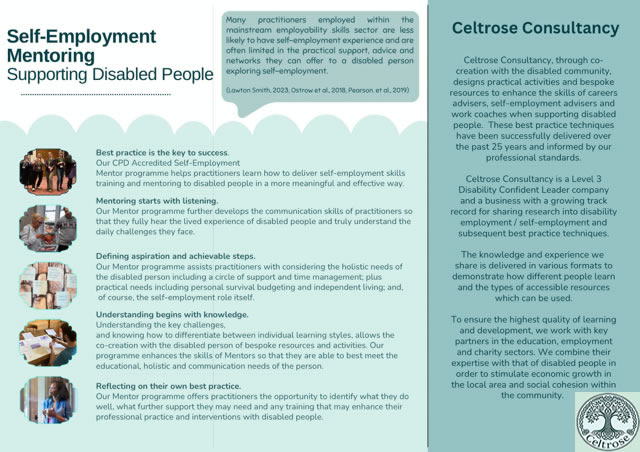
Celtrose Consultancy’s services centre on training, mentoring development, and accessibility improvement for professionals who support neurodivergent and disabled people exploring self‑employment.
Celtrose help advisers become confident, inclusive mentors using evidence‑based, disability‑aware practice.
Inclusive mentoring training — Practical, research‑led training that teaches advisers how to support disabled and neurodivergent clients in ways that reduce communication barriers, adapt processes, and build strengths‑based action plans.
Evidence based practice rooted in doctoral research
Lived experience informed training
SEND aware communication strategies
Tools that help advisers adapt systems rather than expecting clients to adapt themselves


“Continuous learning is the minimum requirement for success in any field”
Dennis Waitley